Start with the work your facility actually does
A useful janitorial supplies checklist starts with rooms, surfaces, soil types, waste volume and the equipment already in use. Facilities and procurement managers should separate routine cleaning from tasks that call for disinfection, then match chemicals, tools, paper, soap and liners to those jobs. Record dispenser fit and weekly consumption before choosing case quantities. Follow product labels and site-specific rules for specialized settings.
The checklist below is for a manager standardizing supplies or preparing a replenishment order. Walk the facility with the cleaning lead, note what gets used at each station, and record failures such as torn liners or empty dispensers. For healthcare, food preparation and other regulated areas, use the procedures required for that setting; this buying guide is general information, not legal or compliance advice.
Sources: CDC, When and How to Clean and Disinfect a Facility
The core checklist covers six supply groups
The core janitorial supply groups are cleaners, cleaning tools, can liners, paper products, hand hygiene products and task-specific protection. A single generic shopping list hides differences between a restroom, a breakroom and a loading area, so add the intended location to each line item. Use the table to identify what the buyer needs to specify before requesting a case quantity.
These catalog examples illustrate available product types and pack units, not a prescribed kit for every facility. Confirm the surface, equipment fit and intended use before selecting any chemical or refill. The janitorial supplies catalog provides the category starting point for a facility-wide list.
Key takeaways
- List each cleaning task and surface before selecting a chemical.
- Record dispenser and equipment models before specifying refills or pads.
- Size liners by the receptacle and the actual waste being collected.
- Convert observed daily use into cases, then decide on a buffer.
| Supply group | Buying detail to record | Catalog example or selection note |
|---|---|---|
| Surface cleaners | Surface, soil, label directions and bottle format | Zep Neutral Lemon Floor Cleaner, 1 gal., 4 bottles per case, SKU AP7 |
| Cleaning tools | Floor type, tool or pad fit, and replacement cycle | Swiffer Sweeper Wet Mopping Pad, 12 pads per box and 12 boxes per case, SKU 16905154 |
| Can liners | Receptacle fit, waste type and bags used per day | Heritage 30 gal. Black High Density Can Liners, 500 bags per case, SKU HERZ6037MKR02 |
| Paper products | Dispenser fit, sheets per roll and rolls used | Tork Universal 2-ply White Bath Tissue, 500 sheets per roll and 96 rolls per case, SKU TM1616S |
| Hand hygiene | Dispenser format, refill volume and daily use | Safeguard 1 gal. Antibacterial Hand Soap Refill, 2 bottles per case, SKU L00003 |
| Task protection | Chemical exposure, splash risk and required fit | Select protection from the task assessment and product safety data sheet |
Sources: OSHA regulation, 29 CFR 1910.132, General requirements
Which cleaners belong on the list?
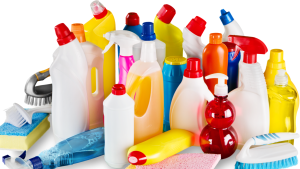
Cleaner selection begins with the material and the soil, then the label. A general cleaner handles ordinary dirt, a degreaser addresses oily residue, and a glass cleaner is intended for glass and similar surfaces. One Pack lists examples across these uses, including Simple Green All Purpose Cleaner, Formula 409 Degreaser Cleaner Refill and Boardwalk Industrial Strength Glass Cleaner with Ammonia; the specific surface directions still control use.
Cleaning and disinfecting are distinct tasks. CDC advises regular cleaning of high-touch surfaces in community settings and says to disinfect where people have obviously been ill; specialized facilities can have different requirements. EPA says an EPA-registered disinfectant must be used according to its label, including the approved surface, target organism and contact time. A product name containing disinfectant does not establish that it suits every surface or pathogen.
For each cleaner, record the surface, soil, application method and dilution instructions from its actual label. If disinfection is required, verify the registration and directions for that product rather than assuming that a general cleaner or hand soap will do the job. Plan for any precleaning and the time the surface must remain wet, then train staff on that sequence.
Sources: CDC, When and How to Clean and Disinfect a Facility; EPA, Selected EPA-Registered Disinfectants; EPA, Difference Between Cleaning, Sanitizing and Disinfecting
Tools and chemical handling need their own check
Cleaning tools should match the task and the equipment already on site. Inventory mops and wringers for hard floors, brooms and dustpans for loose debris, brushes for detail work, and appropriate cloths or pads for wiping. Check pad attachment and dispenser compatibility before adding a refill to the purchase list; a case of the wrong format cannot solve a cleaning gap.
For chemical work, OSHA's hazard communication rule addresses labels, safety data sheets and worker information and training for hazardous chemicals. Its general PPE rule requires employers to assess workplace hazards and select suitable protection where needed. Put the chemical label and safety data sheet beside the task list so staff can identify handling, ventilation and protection needs rather than choosing gloves by color or habit.
Keep chemical mixing out of routine improvisation. CDC warns against mixing bleach or other disinfectants with cleaners because dangerous vapors can result. If a task involves multiple products, follow each label and the facility's procedure, and give staff a clear sequence for rinsing or changing products when required.
Sources: OSHA regulation, 29 CFR 1910.1200, Hazard communication; OSHA regulation, 29 CFR 1910.132, General requirements; CDC, Cleaning and Disinfecting with Bleach
Size can liners to the receptacle and the waste
Can liner selection starts with the can opening and depth, not the gallon number alone. Measure the receptacle, allow enough material to secure the liner over the rim, and note whether the contents are light paper, wet waste or items that can puncture a bag. Test a small set of candidates in the actual cans before standardizing a case across departments.
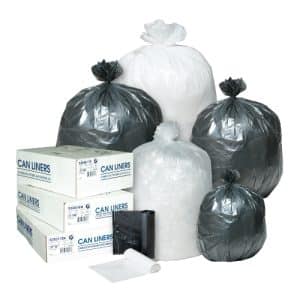
The can liners category includes several capacities and pack quantities. For example, the catalog lists Integrated 10 gal. Black High Density Commercial Can Liners in cases of 1000 bags, Heritage 30 gal. Black High Density Can Liners in cases of 500, and Boardwalk 45 gal. Black Low-Density Waste Can Liners in cases of 100. Capacity and film type are selection clues, but neither guarantees performance with a particular waste stream.
Count how many bags each station uses on a normal day and on a peak day. A liner that slips into the bin, tears at removal or leaves excess material is a prompt to revisit fit or product choice. Record the final can location, approved liner SKU and typical bags per change so substitutes can be evaluated against the same job.
Restroom and breakroom refills depend on fit
Restroom supplies need a dispenser map as well as a quantity estimate. Record tissue roll dimensions and dispenser model, towel format, soap dispenser type and refill connection before ordering a different brand or pack. A large case count is useful only when staff can load the refill into the installed hardware.
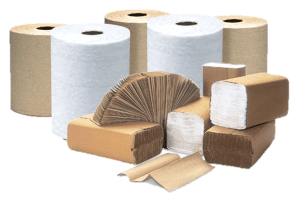
The catalog lists Tork Universal 2-ply White Bath Tissue at 500 sheets per roll and 96 rolls per case, Boardwalk Kitchen Roll Towels at 250 sheets per roll and 12 rolls per case, and Safeguard 1 gal. Antibacterial Hand Soap Refill at 2 bottles per case. Those figures support case planning, but they do not establish compatibility with any particular dispenser. Check the exact refill or roll specification against the installed unit.
Include restroom surfaces and waste containers in the same station record. If a bowl cleaner or disinfectant is part of the routine, keep its label directions with the cleaning schedule. If staff use a different towel or soap format in a breakroom, list it separately so one apparent paper or soap line does not hide two incompatible supplies.
Turn the checklist into a reorder quantity
A reorder quantity should come from observed consumption, not the number of rooms alone. Record opening balance, cases received and closing balance over a representative week, then divide the units used by operating days. Repeat after a high-traffic week if usage varies, and keep unusual cleanup events separate so they do not distort the routine baseline.
Suppose six restrooms together use 18 bath tissue rolls per day over five operating days. That is 90 rolls for the week; one 96-roll case of the cataloged Tork tissue covers that illustrative use and leaves six rolls before any reserve. If the facility wants a larger buffer, add it explicitly and round the resulting total up to full cases rather than treating one case as a universal recommendation.
Track each supply in its ordering unit: bags per case, rolls per case, bottles per case or pads per box and boxes per case. Review empty-dispenser reports, liner failures and leftover cases when setting the next order. The process catches both stockouts and a specification that looked sensible on paper but does not work at the station.
| Input or result | Calculation | Amount |
|---|---|---|
| Observed combined daily use | Count across six restrooms | 18 rolls |
| Five-day requirement | 18 rolls x 5 days | 90 rolls |
| Catalog case quantity | Tork Universal 2-ply White Bath Tissue | 96 rolls per case |
| Balance before reserve | 96 rolls - 90 rolls | 6 rolls |
Prepare a quote from the approved supply list
A useful quote request connects each product to its job. Give the One Pack team the facility type, surfaces and soils, receptacle dimensions, installed dispenser or cleaning equipment model, expected use and preferred case quantity. Include the catalog SKU where known and say whether the request is for a first specification or a repeat order.
For chemicals, identify any label use requirements, concentration or format the staff need to follow. For paper and soap, provide a dispenser photo or model number; for liners, provide can measurements and a description of the waste. This lets procurement compare candidates against the same application and ask about pack units without assuming a product fits simply because its category sounds right.
Keep the station list with the cleaning schedule and update it when equipment or tasks change. Facilities and procurement managers can send the approved list through request a quote. For related hand-cleaning decisions, see the heavy-duty hand cleaner guide.
Frequently asked questions
Does every surface need disinfectant?
No. CDC says routine cleaning is generally enough in many community settings, while areas where someone has obviously been ill may need disinfection. Follow the applicable setting's procedures and the disinfectant label.
Can one liner size cover every waste bin?
Usually a single capacity label is not enough to establish fit. Measure each receptacle and test the liner with the waste and removal method used at that station.
How do I compare case quantities across products?
Convert every candidate to the unit actually used, such as bags, rolls or bottles per week. Then check the case pack and add a stated reserve before rounding to full cases.
What should I provide for a janitorial supply quote?
Send the task and surface list, can dimensions, dispenser and equipment models, known SKUs, expected usage and desired pack units. Include any special label use requirements for the chemicals.
Sources: CDC, When and How to Clean and Disinfect a Facility