Choose for the soil, surface, and liquid
For a facilities or procurement manager choosing hydrospun wipers, start with the soil, surface, cleaning liquid, and acceptable residue level. Compare candidate wipers on a small, representative job, recording how many sheets are used and whether the surface is left clean without visible fibers. Treat a wiper as a cleaning material or applicator, not as proof of chemical compatibility or disinfection; confirm those requirements separately.
The right choice depends on the job you are standardizing. A dry dusting station, a greasy maintenance bench, and a counter cleaned with a labeled disinfectant place different demands on the wiper and on the liquid used with it. Decide which jobs can share one format and which need separate supplies.
Key takeaways
- Describe the soil and surface before comparing wiper names or case quantities.
- Test wet handling, visible lint, and surface finish on the actual task.
- Check the cleaner or disinfectant label and the workplace chemical instructions separately.
- Use observed sheets per task to set the quote quantity.
What does hydrospun tell you?
Hydrospun is a term buyers may encounter when looking for nonwoven wipers. INDA defines spunlace, or hydroentangling, as bonding a fiber web by interlocking fibers with high-velocity water streams. That describes a manufacturing method, not a guaranteed fiber blend, absorbency rate, lint level, solvent tolerance, or reuse limit for every finished wiper.
Ask for the exact product's construction and performance data when those properties decide the purchase. A label such as heavy duty can help identify a catalog item, but it cannot replace a task-specific check on a painted panel, polished fixture, machine guard, or other sensitive surface. Inspect the surface after it dries, since residue and stray fibers may be harder to see while wet.
Use the same amount of liquid and a similar wiping motion when comparing samples. Note whether the wiper stays intact, releases visible material, spreads the soil, or leaves the finish you need. A small trial gives a facilities team a repeatable basis for choosing a format without claiming a laboratory rating the product listing does not provide.
Sources: INDA, Nonwovens Glossary of Terms
Compare catalog formats by the job
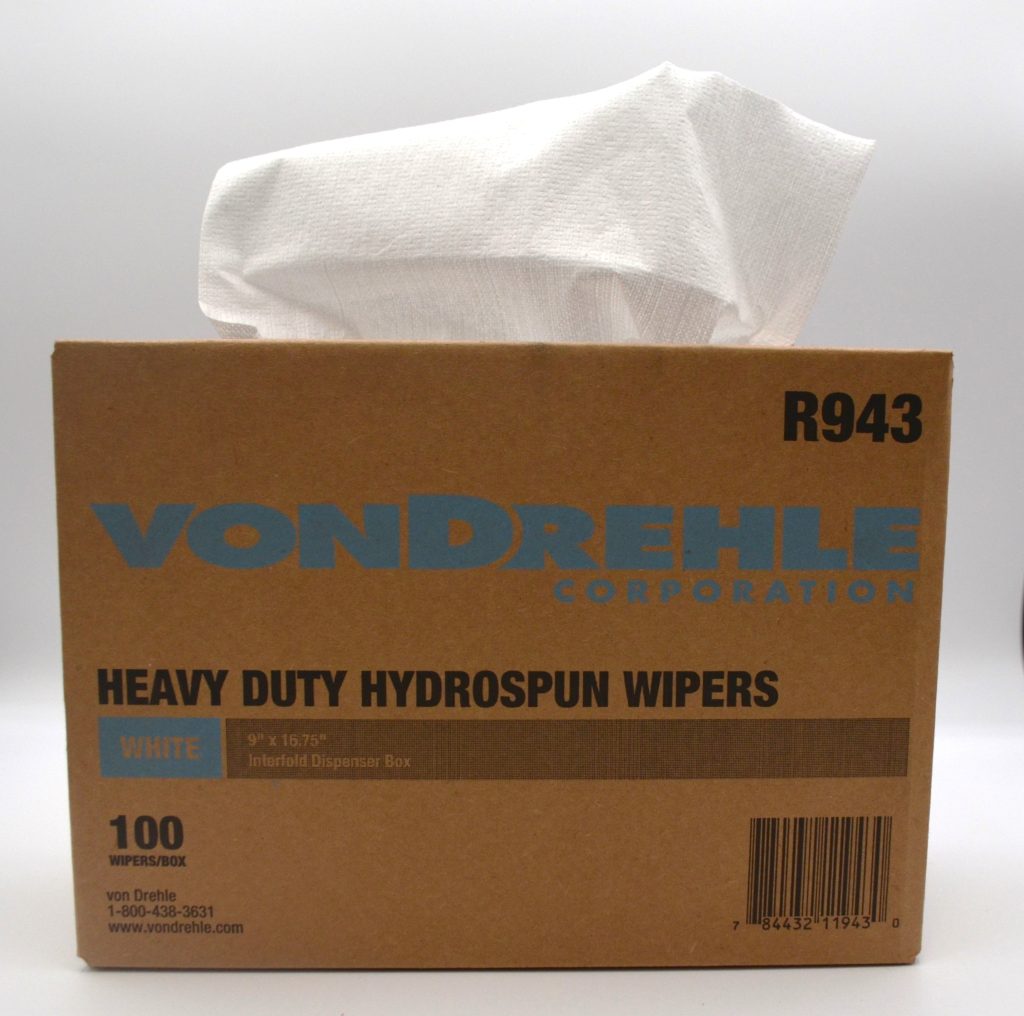
One Pack's catalog lists an R943 Heavy Duty Wiper with 100 wipers per box and 10 boxes per case. It also lists woven terry and knit rag formats by case weight, so the pack units are different. The table is a starting point for a side-by-side trial, not a ranking of cleaning performance.
For a maintenance bench, record how many pieces it takes to remove the same soil from the same area. For a finished surface, check the result under the lighting used for inspection. If the team also needs a washroom towel, evaluate that as a separate dispensing task rather than assuming it substitutes for a work wiper.
| Catalog item | Catalog pack | Practical comparison question |
|---|---|---|
| R943 Heavy Duty Wiper | 100 wipers per box; 10 boxes per case | How many wipers complete the defined job? |
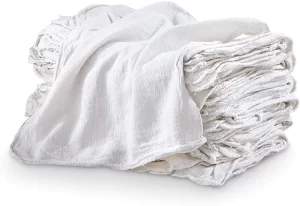
| Hospeco White Woven Terry Rags, HOS53725 | 25 pounds per case | How many rags complete the same job? |
| Hospeco Colored Assorted Knit Polo T-Shirt Rags, HOS24510 | 10 pounds per case | Does this rag format suit the surface and soil? |
| VonDrehle Preserve White Multi-Fold Towels, 548W | 16 packs per case | Is a dispensed towel needed for a separate station? |
Cleaning, disinfection, and chemical checks
A wiper does not make a cleaning liquid a disinfectant. CDC advises cleaning visibly soiled surfaces before disinfection because dirt can interfere with a disinfectant's effect. For ordinary community facilities, its guidance also distinguishes routine cleaning from situations that call for disinfection; specialized workplaces may have different procedures.
If a task requires disinfection, choose an EPA-registered product for the intended surface and follow its label. EPA says the labeled contact time is the period the surface must remain visibly wet. Check whether the directions allow the way the liquid will be applied; a dry R943 wiper paired with a liquid is not automatically equivalent to a registered, premoistened disinfecting wipe.
For workplace chemicals, review the product label and safety data sheet before assigning the task, including protective equipment and disposal instructions. The federal hazard communication rule addresses labels, safety data sheets, and worker training for hazardous chemicals within its scope. This article is general purchasing information, not legal or compliance advice; the facility's procedures and applicable rules govern actual work.
Sources: CDC, When and How to Clean and Disinfect a Facility; EPA, Selected EPA-Registered Disinfectants; eCFR, 29 CFR 1910.1200 Hazard Communication
Estimate weekly use from a short trial
R943's catalog pack is 100 wipers per box and 10 boxes per case, or 1,000 wipers per case by multiplication. To plan a quote, count average wipers per station per shift for a few representative shifts, then multiply by stations and shifts per week. Round for the pack unit you intend to request and allow for normal variation in workload.
The example below assumes 10 wipers per station per shift and five shifts per week; those are hypothetical inputs, not a usage claim for R943. A four-station operation would use 4 x 10 x 5 = 200 wipers per week under that assumption. If the operation changes liquids, surfaces, or cleaning frequency, run the count again before using it to set a standing quantity.
| Stations | Wipers per week | Boxes per week | Weeks per 10-box case |
|---|---|---|---|
| 2 | 100 | 1 | 10 |
| 4 | 200 | 2 | 5 |
| 10 | 500 | 5 | 2 |
Prepare a useful wiper quote request
A procurement manager can turn the trial into a concise specification: describe the soil, surface, cleaning liquid, acceptable visible residue, and whether the item is used dry or wet. Include the number of workstations, estimated sheets per shift, shifts per week, and preferred box or case quantity. Identify any dispenser or storage constraint that affects the format.
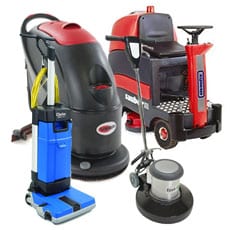
For the R943 listing, name the product and its 100-wiper box and 10-box case configuration so the unit of measure is clear. You can review cleaning equipment and the broader janitorial supplies checklist while assembling the order, then request a quote with the application and estimated quantity. If rag formats are also in the trial, report their separate case-weight units rather than treating pounds as a wiper count.
Frequently asked questions
Is every hydrospun wiper low lint?
No general construction term establishes a measured lint level for a particular finished product. If visible fibers would disrupt painting, electronics work, or a final inspection, request product-specific data and check a sample on the actual surface under the right light.
Can R943 be used with any solvent?
The catalog listing does not give a solvent compatibility rating for R943. Ask for product-specific guidance, check the chemical label and safety data sheet, and trial the combination on the intended surface before standardizing it.
Does wiping with R943 disinfect a surface?
A dry wiper has no disinfectant claim in the catalog information. When disinfection is required, use an EPA-registered product according to its labeled surface, application, and wet contact time; the wiper alone does not establish efficacy.
How many R943 wipers are in a case?
The catalog lists 100 wipers per box and 10 boxes per case, which is 1,000 wipers per case. Estimate weekly demand from observed use, then state whether the requested quantity is in boxes or cases.