Define the shipment before choosing materials
Industrial packaging should be specified as a system: the container, interior protection, closure and pallet containment must suit the product and its handling route. Warehouse and procurement managers should start with dimensions, weight, fragility, storage conditions and known damage, then compare materials against those risks. A catalog size or film gauge alone cannot establish transit performance; validate the assembled shipment before standardizing it.
The first decision is the shipping unit: a single parcel, an individual freight package or a palletized load. Record where it is lifted, stacked, stored and transferred, because each step changes the likely failure mode and the parts of the pack that need attention.
Separate product protection from pallet containment in the written specification. A carton with suitable cushioning may protect the item, while film and strapping address movement among cases on the pallet; neither function automatically replaces the other.
Key takeaways
- Start with product dimensions, weight, fragility and observed damage.
- Specify the complete pack, including closure and pallet treatment.
- Compare alternatives by the failure they need to prevent.
- Confirm performance with the actual packed product and route.
Materials address different failure modes
Industrial packaging materials solve different problems, so material names alone are too broad for a purchasing specification. Corrugated cartons form shipping containers, cushioning limits internal movement, and unitizing supplies hold grouped packages together. ASTM's transport packaging design guide treats shipping containers, interior protection and unit loads as related parts of one design.
Use the table as a screening tool, then add dimensions, quantities and a test plan. A material that works well for one product can be unsuitable when the load geometry, handling equipment or storage exposure changes.
| Component | Primary job | Confirm before specifying |
|---|---|---|
| Corrugated carton | Contains an individual shipment | Inside dimensions, product fit and required box performance |
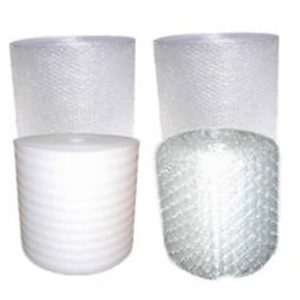
| Kraft paper, bubble wrap or foam | Fills space or cushions a product | Fragile surfaces, movement and packing method |
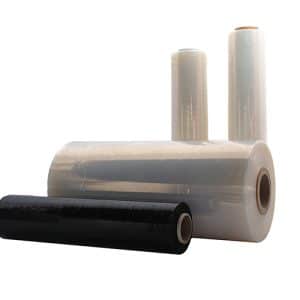
| Stretch wrap | Contains cases on a pallet | Hand or machine application, width and gauge |
| Strapping and edge protectors | Stabilizes a unit load and shields contact edges | Strap material, tool, edge geometry and tension |
| Pallet top sheet or cover | Covers exposed load surfaces | Pallet dimensions and coverage needed |
Sources: ASTM International, Standard Guide for Transport Packaging Design, D6198-18
Specify the carton and interior protection
A carton specification starts with the product's packed dimensions, weight, orientation and expected stacking pattern. Select an inside size that leaves room for the chosen interior protection without allowing the item to travel freely. The corrugated carton range and cushioning materials provide distinct choices that should be evaluated together.
Interior protection addresses collisions among components and contact between sensitive surfaces and the box wall. Write down the placement of dividers, inserts or cushioning, the closure method, and any surface that must remain visible for handling or identification. A box size alone does not describe a repeatable pack.
For a mixed group of products, create pack families around similar size, fragility and route rather than assigning one carton to every item. The packaging selection guide covers the broader decision, while each family's specification should record the exact materials and placement used.
Unitize pallets as a separate decision
Pallet unitization needs its own specification, especially when a load has uneven sides, sharp edges or an exposed top. Define the pallet footprint, overall height, case pattern and whether operators apply film by hand or with a machine. Then check how the proposed film, strap or protector contacts the load.
One Pack's catalog lists SKU 501127 as 18 in x 60 gauge x 1,500 ft cast hand stretch wrap, with four rolls per case. It also lists SKU 500152 as 20 in x 80 gauge x 5,000 ft cast machine grade stretch wrap, with 40 rolls per skid. These are ordering specifications, not evidence that either film will hold a particular pallet; stretch wrap selection also depends on the equipment and load.
For edges, the catalog lists SKU 3327180 as a 3 in x 3 in x 27 in, .180 heavy-duty edge protector. SKU PC507 is a 54 in x 44 in x 96 in, 1 mil clear pallet cover supplied 100 per roll. If strapping is considered, choose the material and compatible tools deliberately; the plastic strapping guide explains that choice.
Test the assembled pack before standardizing it
The assembled shipping unit is what needs validation, because an individual material specification cannot capture interactions among the product, carton, closure and pallet treatment. Document a sample pack with photos or a packing instruction, then inspect it after representative handling. Record crushed corners, shifted contents, loose containment, punctures and other failures that point to a specific change.
ISTA's test procedure index identifies different general simulation procedures for parcel shipments, less-than-truckload shipments and similar products in unitized truckload shipments. Choose a procedure that fits the distribution path rather than treating one test as universal. ASTM D4169 provides a framework for evaluating shipping units against a sequence of distribution hazards; its scope says it does not replace material specifications.
A pass or failure belongs to the tested configuration. If product mass, carton construction, closure, cushioning placement or pallet pattern changes, review whether the earlier evidence still applies before treating the replacement as equivalent.
Sources: International Safe Transit Association, Test Procedures; ASTM International, Standard Practice for Performance Testing of Shipping Containers and Systems, D4169-23e1
Waste and regulated contents change the brief
Waste reduction is part of industrial packaging design, but it must follow the protection requirement. EPA's non-hazardous waste hierarchy puts source reduction and reuse ahead of recycling; a practical review can compare right-sized cartons, less unused cushioning and reusable components where operations allow. Measure material use and damage together so that reducing packaging does not simply shift waste into damaged product.
Environmental claims require evidence as well as a material choice. The FTC's environmental marketing guidance says claims about a product or its packaging need competent, reliable support; ask for documentation before calling a film, insert or complete pack recyclable, biodegradable or lower impact. Check the intended collection or disposal path when evaluating end-of-life options.
Hazardous contents require a separate regulatory review before ordinary packaging choices are finalized. PHMSA's shipper advisory reminds hazardous-material shippers to identify, package and communicate hazards in line with the Hazardous Materials Regulations. This guide is general information, not legal or compliance advice.
Sources: US EPA, Sustainable Materials Management: Non-Hazardous Materials and Waste Management Hierarchy; Federal Trade Commission, Environmental Marketing; PHMSA, Hazardous Materials: Advisory Guidance on Packaging and Shipper Responsibilities
Build a quote-ready specification
A quote-ready packaging specification gives procurement and sales a common basis for comparison. Send the product and packed dimensions, weight per unit, units per carton, cartons per pallet, typical order quantity, route, handling method and any known damage or moisture exposure. State whether the application is manual or machine based and identify the equipment already in use.
Ask suppliers to identify exact item sizes, gauges, roll lengths, pack quantities and compatible tools on the quote. The catalog examples show why unit of sale matters: a hand film may be specified by case, while a machine film may be specified by roll or skid. Verify the proposed pack against your handling and shipping conditions before standardizing a purchase.
One Pack is based in Edison, New Jersey. Send the brief through request a quote or call 732-343-7857, and include a drawing or photo if it helps show the load geometry. A clear brief makes it easier to compare like with like when the specification is revised.
Frequently asked questions
Is industrial packaging just a heavy-duty box?
No. It can include the shipping container, interior protection, closure and the materials used to build a unit load.
Should I choose stretch wrap by gauge alone?
No. Width, roll format, application equipment, pallet shape and the wrap pattern also matter. Validate the wrapped load for its intended handling route.
Can a pallet cover replace stretch wrap?
A cover addresses surface coverage; wrap is used for load containment. Specify both functions separately when both are needed.
What should I send for a packaging quote?
Send product dimensions and weight, desired pack quantity, pallet pattern, route, application equipment and the failure you want to solve.