Choose packaging from the shipment backward
To choose packaging for business shipping, start with the product's packed dimensions, weight, fragility, and exposure to moisture or temperature changes. Match the carton, cushioning, and closure to the handling route, then check the box maker's weight guidance and test the complete pack. Standardize only after you compare damage, material use, packing time, and the quantities you need to buy.
Warehouse and procurement managers making a packaging specification need to define what an acceptable arrival looks like. A box that fits the product is only a candidate: its contents must also stay protected through storage, handling, and delivery.
Key takeaways
- Measure the packed product and allow room for necessary protection.
- Choose the outer package and interior protection as one system.
- Treat a carton strength marking as one specification, not a finished-package guarantee.
- Record packing time and damage alongside material use.
Sources: UPS, How to Pack Your Shipments
Write a requirement sheet before comparing materials
A packaging requirement sheet makes the choice repeatable across products and shifts. Record each product's dimensions after any retail packaging, its weight, the number of items per shipment, and the surfaces most likely to be damaged. Note whether it ships alone, with other items, or as part of a pallet load.
The route belongs on the same sheet. Identify parcel or freight handling, expected stacking, storage conditions, and any recurring damage such as crushed corners or movement inside the box. If a package passes through more than one route, describe each route before choosing a single standard pack.
- Product: packed dimensions, weight, shape, sharp edges, and fragile points.
- Shipment: items per carton, handling route, stacking, and storage conditions.
- Packing station: closure method, equipment in use, and acceptable packing time.
- Outcome: allowable product damage, package appearance, and material use.
Match the carton, cushioning, and closure
The outer package provides containment and a surface for closure and labeling; cushioning controls movement and helps protect vulnerable parts. Start with stock corrugated cartons when a box suits the item, then compare the space left around the packed product. Check actual inside dimensions before selecting a catalog size, since the listed dimensions alone do not establish usable interior space.
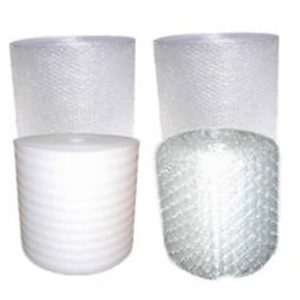
Choose cushioning materials for the product's failure mode. UPS describes bubble wrap as cushioning for lightweight items, air bags as void fill for lightweight items without sharp edges, and tightly crumpled kraft paper as void fill for lightweight, non-fragile items. Its guidance also calls for secure closure and seams; follow the requirements of the carrier used for the shipment.
A fragile item may need protection at corners and separation from other items, while a sturdy item may chiefly need its empty space filled. Compare how much material each approach uses after the packer has assembled it, since a material's name alone does not establish the protection it provides.
Sources: UPS, How to Pack Your Shipments
How should you compare carton candidates?
A carton shortlist should show catalog facts beside the checks still needed at the packing bench. The examples below span different sizes and constructions in One Pack's input catalog; they are not interchangeable choices for one product. Confirm the interior fit, packed weight, closure, and shipping performance before approving any of them.
The 12 x 9 x 5 in carton is listed at 25 boxes per bundle and sold by each. For 500 planned one-carton shipments, 500 divided by 25 equals 20 bundle equivalents for planning; confirm the quote unit when requesting supply. The calculation does not tell you whether that carton fits the product or protects it adequately.
| Candidate | Catalog specification | Catalog pack detail | Verify before selection |
|---|---|---|---|
| BXR14 | 6 x 4 x 4 in RSC, 32 ECT | 25 per bundle; sold by each | Inside fit and space for cushioning |
| BXR1295 | 12 x 9 x 5 in RSC, 32 ECT | 25 per bundle; sold by each | Packed weight, fit, and movement |
| BS201614HDDW | 20 x 16 x 14 in double wall, 48 ECT | 15 per bundle; sold by each | Fit, stacking, and complete-pack performance |
Sources: UPS, How to Pack Your Shipments
Standardize the pack, then compare its full use
Standardizing a successful pack can reduce the number of carton and cushioning variations a team has to manage. Group products only when they can share a carton without excessive empty space or a loss of protection. Write down the carton, cushioning placement, closure, and packing sequence so different operators can build the same package.
Compare candidates per successful shipment, not by carton count alone. Track cartons and cushioning consumed, packing time, storage space, and damage or repacking observed during a trial. The useful option is the one that meets the arrival requirement with a manageable process and material quantity; a smaller box or less fill needs the same performance check.
- Record the material quantity used for a fixed number of shipments.
- Time packing with the normal equipment and staffing.
- Inspect returned or damaged packs for a repeatable failure pattern.
- Revise the pack specification when the product or handling route changes.
Verify performance and environmental claims
Performance testing should represent the complete packed product and its distribution route. ISTA distinguishes early screening tests from tests that simulate transport conditions, and advises using representative product and package samples. A passed test supports the conditions tested; it does not establish that every route or future product change will perform the same way.
Environmental descriptions need a separate check. The FTC advises against broad, unqualified claims such as eco-friendly and says recyclable and compostable claims need appropriate support and, in some cases, qualifications. Ask for evidence about the specific package component and disposal route before putting a claim on customer-facing packaging; this is general information, not legal or compliance advice.
For a closer look at material choices, see packaging materials compared. Keep any environmental goal on the requirement sheet alongside protection and material use, then evaluate the assembled pack against all three.
Sources: ISTA, Test Procedures; ISTA, Getting Started with Design and Testing; FTC, Environmental Claims: Summary of the Green Guides
Prepare a quote from the approved specification
A quote request should identify the package that passed your fit and performance checks, or clearly say which choices still need evaluation. Provide the product's packed dimensions and weight, carton size or candidate SKU, cushioning and closure requirements, expected quantity, and whether packing is manual or uses equipment. Include the handling route and any known damage pattern so the discussion stays tied to the application.
One Pack is based in Edison, New Jersey. When your requirement sheet and expected quantities are ready, request a quote or call 732-343-7857. If you are still comparing samples, describe the options and the checks you plan to run before standardizing a supply.
- Product dimensions, weight, and units per shipment.
- Candidate carton size or SKU, plus cushioning and closure needs.
- Estimated order quantity and recurring usage.
- Shipping route, packing equipment, and observed failures.
Frequently asked questions
Is the smallest box that fits always the best choice?
No. Leave enough usable interior space for the protection the product needs, then check the assembled package for movement and damage. Compare material use only after the pack meets its arrival requirement.
Does a 32 ECT carton tell me how much my shipment can weigh?
The ECT marking is a board specification, not a complete approval for a particular packed product. Check the box maker's guidance, the carrier's requirements, and the performance of the finished pack.
When should I change a standard packaging specification?
Review it when the product, shipment quantity, packing method, or handling route changes. Recheck it when recurring damage or repacking suggests that the existing pack no longer meets the requirement.
What should I send when asking for a packaging quote?
Send packed product dimensions and weight, expected quantities, candidate carton sizes or SKUs, cushioning needs, and equipment in use. Add the shipping route and any damage you are trying to prevent.