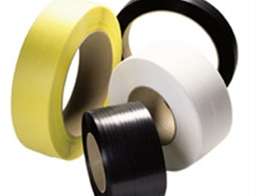
Choose plastic strapping as a complete system
Plastic strapping should be chosen by what the package must hold, how much it may shift, and which tool will tension and join the band. Polypropylene (PP) is a starting point for cartons and lighter bundles; polyester (PET) suits more demanding unit loads. Confirm the exact strap's breaking strength, joint performance, width, thickness, and equipment fit before standardizing it; no material label alone makes a load secure.
This guide is for warehouse, shipping, and procurement managers choosing a specification or troubleshooting loose bands. Start with a representative packed load and its handling route, then compare complete strap-and-closure systems. Record what happens after stacking, moving, and unloading, because a band that looks tight at the station may loosen if the package settles.
Key takeaways
- Choose PP or PET from the load and handling task, then confirm the exact strap grade.
- Check strap, closure, tool, and dispenser compatibility as one system.
- Use measured band length and package volume to estimate demand.
- Verify recycling acceptance with the actual commercial collector.
Sources: Signode, PP Strand polypropylene strapping brochure; Signode, Tenax polyester strapping brochure
PP and PET suit different starting applications
Polypropylene strapping commonly fits carton closure, small bundles, and lighter pallet loads. Its available widths and strengths vary by product, so PP is a material category rather than a single strength grade. Polyester strapping is a candidate when a load needs more demanding tension retention or must tolerate movement during handling; the exact product still needs to be checked against the load.
Use the table as a screening tool, not a load rating. A dense or sharp-edged bundle can change the decision even when its weight resembles that of a carton load. If either material damages the package at the tension needed to hold it, change the pack design, add edge protection, or revisit the strap path rather than simply pulling harder.
| Material | Starting application | Check before selection |
|---|---|---|
| PP | Cartons, bundles, and lighter pallets | Exact grade, closure, and tool fit |
| PET | More demanding unit loads and movement during handling | Retained tension, joint, and tool fit |
Sources: Signode, PP Strand polypropylene strapping brochure; Signode, Tenax polyester strapping brochure
Breaking strength is only one part of the decision
Breaking strength describes a piece of strap under a specified test, while the installed band also has a seal, buckle, or weld. The joint and the package edges can become weak points. Manufacturer tool documents specify joint performance separately from strap properties, so do not treat a coil's breaking-strength figure as the capacity of the finished package.
Ask for the exact strap data sheet and the closure or tool instructions. Compare breaking strength, elongation, retained tension, and the recommended joining method for the actual width and thickness. Then check a representative pack through its normal handling steps and inspect for looseness, torn corners, crushed cartons, or slipping joints. Record the strap, setting, closure, and result so a later substitution can be checked against the same baseline.
Sources: Signode, Strapping Hand Tools brochure; Signode, Tenax polyester strapping brochure
Match the tool, closure, and coil
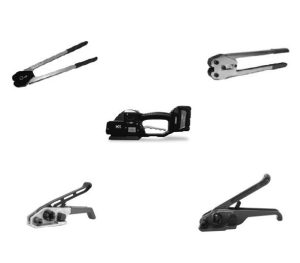
Tool compatibility is part of the strapping specification. Hand tensioners, sealers, combination tools, and powered strappers have different ranges for strap material, width, and thickness. A closure that physically fits a band is not necessarily the right joint for that material and application.
Before ordering, identify the tool model, its approved strap range, joining method, dispenser core size, and needed coil orientation. Check how the strap feeds through the tool and whether its thickness suits the machine. If the operation uses a powered strapper, confirm the machine maker's approved settings and check a sample joint before changing materials. One Pack lists plastic strapping tools and dispensers and seals and buckles as separate categories.
Apply and remove bands with care
Applying and removing strapping calls for a stable package and a clear work area. Route bands so they restrain the intended items, avoid exposed sharp edges, and do not crush the product or carton. Edge protectors may spread contact over a corner, but they do not replace a correctly chosen strap or closure. Keep hands away from the band and tool during tensioning, and support a bundle before releasing its bands.
OSHA requires employers to assess hazards that call for personal protective equipment and select protection for those hazards. OSHA's hazardous-energy rule addresses servicing and maintenance where unexpected startup or release of energy can injure workers, which matters when clearing or servicing a powered strapper. Follow the equipment instructions and site procedures for those tasks. This is general information, not legal or compliance advice.
Sources: eCFR, 29 CFR 1910.132, personal protective equipment requirements; eCFR, 29 CFR 1910.147, control of hazardous energy
Measure usage before requesting a quote
Coil quantity starts with measured strap consumption, not a guessed number of pallets per coil. Measure one completed band around a real package, including the overlap or tail required by its closure. Multiply by bands per package and planned packages, then add a documented allowance for setup, offcuts, and variation. Coil footage and pack quantity must come from the exact item quoted.
For example, a measured 14 ft band used twice on each of 100 identical pallets requires 2,800 ft of applied strap before any allowance. That arithmetic does not establish how many coils to buy, because the quoted coil's length and usable yield must still be known. A change in pallet height, band orientation, or closure tail changes the result, so measure the actual packing pattern.
For a useful quote, send the package dimensions and weight range, what is being held together, the handling and storage conditions, bands per package, expected monthly volume, tool and dispenser models, and preferred closure. Include a photo or drawing of the band path if the load is irregular. Compare the polypropylene strapping and polyester strapping categories, then request a quote with the measured strap length. If pallet stability is also being addressed, the stretch wrap guide covers that packaging decision.
Recycling depends on the receiving program
Recycling claims for used strapping depend on the exact resin and the receiving program. A product's ability to be recycled does not mean a particular hauler or facility accepts loose bands; EPA advises checking local acceptance for plastics. Ask a commercial recycler whether it accepts PP or PET strapping, whether the two must be kept separate, and how bands should be collected.
Request documentation for any recycled-content claim on the particular strap being quoted and confirm an actual collection route before describing the used material as recyclable in your operation. If no route exists, reducing unnecessary strap length and avoiding preventable rejects are practical waste controls.
Frequently asked questions
Can the same tool use PP and PET?
Do not assume a tool approved for one material works with the other. Check its model instructions, approved width and thickness ranges, and joining method before switching coils.
Does a wider band always secure more weight?
No. Width alone does not establish performance; thickness, material grade, joint, tension, and package edges also matter. Use the exact strap data and check a representative pack.
Why does a band loosen after handling?
Cartons may settle, a joint may slip, or the strap may not retain enough tension for that package. Inspect the joint and package condition before raising the tension setting.
Can strapping replace stretch wrap?
Strapping can bind selected items, while wrap can help contain smaller items across a pallet face. Choose each from the actual load and handling problem; some loads need both.