Start with the hazard classification
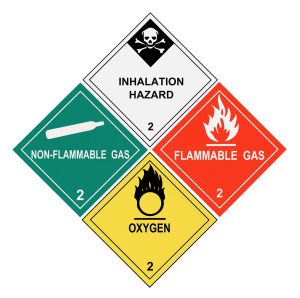
For a warehouse shipping manager, DOT hazmat shipping labels start with the material's classification and the label codes in column 6 of the 49 CFR 172.101 Hazardous Materials Table. On a covered package, use the required hazard labels, place them off the bottom near the proper shipping name when space allows, and check size, visibility, and durability. Exceptions and transport mode can change the answer; this is general information, not legal or compliance advice.
Warehouse and procurement managers choosing a label specification need the approved shipping description before selecting artwork or roll quantities. The table's first label code identifies the primary hazard; later codes identify subsidiary hazards, and other rules may add labels. A generic warning sticker or a handling label cannot establish which regulated hazard label a particular shipment needs.
Key takeaways
- Identify the proper shipping name and all applicable hazard label codes before choosing labels.
- Place required labels off the bottom and near the proper shipping name marking when space allows.
- Check the 100 mm diamond rule, visibility, weather resistance, and exposure performance.
- Confirm exceptions and transport mode before ordering or applying labels.
Sources: eCFR, 49 CFR 172.101, Hazardous Materials Table; eCFR, 49 CFR 172.400, General labeling requirements; eCFR, 49 CFR 172.402, Additional labeling requirements; GovInfo, 49 CFR 172.406, Placement of labels; eCFR, 49 CFR 172.407, Label specifications
Which hazard labels does the package need?
The required hazard labels come from the classified material, not from a warehouse's usual sticker assortment. In 49 CFR 172.101, column 6 names the primary label code first and then any subsidiary codes. Read the entry together with the applicable exceptions, additional labeling rules, package type, and transport mode before creating a pick list.
For example, the table entry for acetic acid, glacial, UN2789, lists label codes 8 and 3. That points to a primary Class 8 CORROSIVE label and a Class 3 FLAMMABLE LIQUID subsidiary label when the package is subject to labeling; it does not make those labels correct for every acid or every package. Section 172.402 can impose further subsidiary labeling requirements, so a single column 6 check may not finish the review.
Section 172.400 generally covers non-bulk packages and certain other containment devices, while its exceptions and other provisions can change the outcome. Assign classification and applicable exceptions through the shipper's hazmat process before warehouse staff print or apply labels. If an entry or exception is uncertain, resolve it before a supply order is standardized.
Sources: eCFR, 49 CFR 172.101, Hazardous Materials Table; eCFR, 49 CFR 172.400, General labeling requirements; eCFR, 49 CFR 172.402, Additional labeling requirements
Place labels on a visible package surface
Hazard label placement is governed by 49 CFR 172.406. A required label normally belongs on a package surface other than the bottom, on the same surface as and near the proper shipping name marking when dimensions allow. The label must stay clearly visible; other markings, attachments, or wrap must not cover it.
When both primary and subsidiary hazard labels are required, place them next to each other. The regulation treats labels within 150 mm (6 in) of one another as meeting that placement rule. Use a contrasting background or the permitted outer border so the label remains visible against the carton.
For air transport, the entire required label or labels must appear on one side of the package. Additional duplicate labels are required for certain packages and containment devices, including packages or overpacks with a volume of at least 1.8 cubic meters (64 cubic feet). A pack station should therefore check package dimensions and mode before assuming one label on one face is enough.
Size and durability are separate checks
The standard hazard diamond size is at least 100 mm (3.9 in) on each side, with a solid inner border about 5 mm (0.2 in) from the edge. Section 172.407 allows proportional reduction when package size requires it, provided the symbol and other elements remain clearly visible. This is a package-size exception, not a general invitation to shrink artwork for a printer.
Durability is a separate requirement. Labels must be durable and weather resistant and withstand 30 days of reasonably expected transportation conditions without deterioration or substantial color change. That is a performance condition for the shipping environment, not a stated 30-day shelf life or expiration date.
Color performance has another test: black and every label color must withstand a 72-hour fadeometer test without substantial change. The rule points to ASTM G 23-69 (1975) or ASTM G 26-70 as descriptions of equipment for that test. Ask a label supplier for evidence that the proposed face stock, ink, and adhesive suit the actual package and route; do not infer regulatory fitness from color or a product photo.
| Package condition | Regulatory path | Warehouse check |
|---|---|---|
| Normal package with adequate face | At least 100 mm on each diamond side | Measure the printed diamond and inner border. |
| Package too small for standard diamond | Proportional reduction may be allowed | Keep every symbol and other element clearly visible. |
| Small non-radioactive package or irregular surface | A securely affixed tag may be allowed | Confirm the 172.406(b) conditions before using a tag. |
Sources: eCFR, 49 CFR 172.407, Label specifications; GovInfo, 49 CFR 172.406, Placement of labels
Use a final pack-station label check
A final pack-station check turns the regulations into repeatable shipping work. Keep the approved material description and label codes with the work order, then inspect the actual finished package rather than only the print file. Record exceptions or special modes in the work instruction so a label format is not reused blindly.
This check focuses on the outer package as offered for transport. For an overpack or mixed package, additional display rules may apply, so send those configurations through the shipper's established hazmat review before release. A handling instruction on the carton does not replace that review.
- Match the approved proper shipping name and identification number to the material and package.
- Match each required primary and subsidiary hazard label to the approved label codes.
- Check the diamond dimensions, required design, color, and condition of each label.
- Place labels off the bottom, near the shipping name when space allows, and together where multiple hazards apply.
- Check that closure tape, stretch wrap, pallet edges, and other markings do not obscure labels.
- Check air shipment and duplicate-label rules when the package or containment device calls for them.
Sources: eCFR, 49 CFR 172.301, Non-bulk marking requirements; eCFR, 49 CFR 172.101, Hazardous Materials Table; eCFR, 49 CFR 172.400, General labeling requirements; GovInfo, 49 CFR 172.406, Placement of labels; eCFR, 49 CFR 172.407, Label specifications
Give procurement the right label specification
Procurement needs the hazard label design, quantity, and application conditions before requesting a supply quote. The D.O.T. labels and plaques category provides a starting category, but the supplied catalog lists no individual DOT-label product or verified performance specification there. Confirm the exact compliant design and material with the shipper's hazmat reviewer and the supplier.
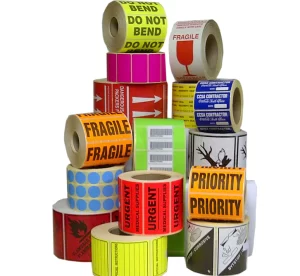
One Pack's listed shipping and handling labels serve a different purpose. For example, SKU DL2264 is a 4 x 6 in "Do Not Double Stack" label listed at 500 labels per roll; that product title does not identify it as a DOT hazard label. Keep handling messages and regulated hazard communication as separate line items.
For a request a quote, provide the required hazard class and label codes, package face dimensions and substrate, expected exposure, application method and equipment, shipment mode, estimated packages per month, and required rolls or cases. For related carton closure decisions, use the packing tape guide. These details let sales discuss a suitable label format without guessing at a shipment's classification.
Sources: eCFR, 49 CFR 172.101, Hazardous Materials Table; eCFR, 49 CFR 172.407, Label specifications
Frequently asked questions
Can a DOT hazard label go on the bottom of a carton?
Generally, no. Section 172.406 requires the label on a package surface other than the bottom, subject to its stated exceptions.
Is a 4 x 4 in sticker automatically a compliant hazard label?
No. Check the 100 mm diamond-side minimum, required design and color, and durability under 49 CFR 172.407; a nominal sticker size alone does not establish compliance.
Does the 30-day rule mean the label expires after 30 days?
No expiration date is stated in that provision. It requires a label to withstand 30 days of reasonably expected transportation conditions without deterioration or substantial color change.
Does a hazard label replace the UN number and shipping name?
No. For non-bulk packages, 49 CFR 172.301 separately requires the proper shipping name and identification number marking unless an exception applies.
Sources: GovInfo, 49 CFR 172.406, Placement of labels; eCFR, 49 CFR 172.407, Label specifications; eCFR, 49 CFR 172.301, Non-bulk marking requirements